
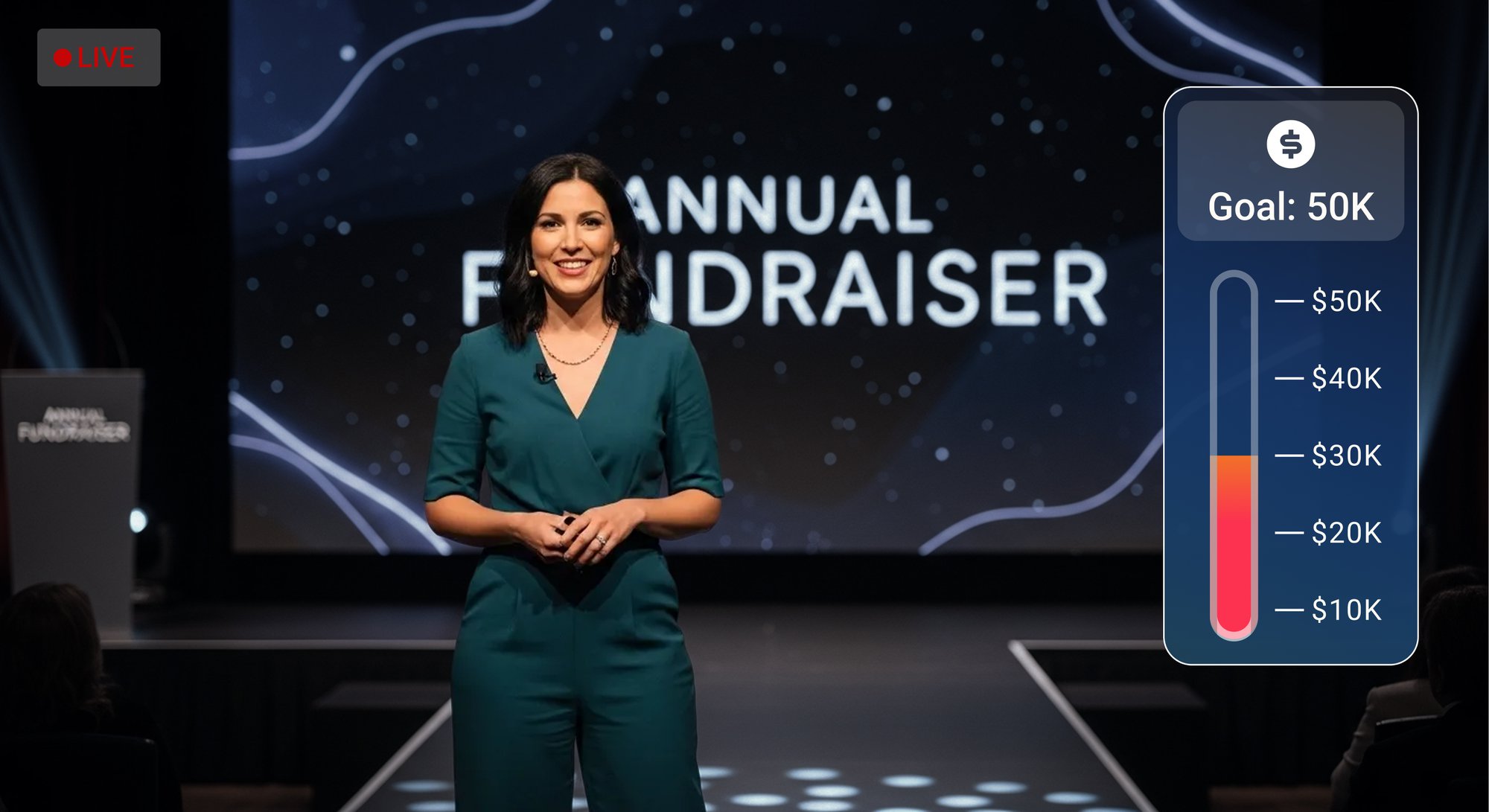
Livestreams as Listening Tools: What Nonprofits Learn When They Go Live
Daniella Bondar
Nonprofits are used to speakingto their supporters.
Sharing updates.
Explaining impact.
Making the case for support.
But livestreams introduce something different: the opportunity to learn about their supporters real time.
When nonprofits go live, they don’t just reach supporters and potential donors. They have a real opportunity to listen and build a deeper understanding of their audience.
How Do Livestreams Help Nonprofits Listen?
Short answer:
Livestreams help nonprofits listen by revealing real-time reactions, questions, and engagement signals that don’t show up in surveys or reports.
What people say, when they say it, and how they respond in the moment tells a deeper story than static feedback ever could.
Listening Happens Between the Talking Points
In a livestream, feedback doesn’t wait until the end.
It shows up:
- When chat spikes during a certain story
- When questions repeat around the same concern
- When engagement drops during a transition
- When reactions cluster around a specific moment
These signals are easy to miss if a livestream is treated like a one-way broadcast. But when interaction is visible and intentional, those moments become insights.
.
What Nonprofits Learn When They Go Live
What People Care About Most
The moments that trigger the most reactions or questions often reveal what supporters truly connect with and sometimes in ways teams don’t expect. A short story might land harder than a long update. A volunteer voice might resonate more than a statistic. Interactive elements like polls or chat prompts make these preferences easier to spot, because they turn passive reactions into visible signals.
Where Confusion Exists
Live questions are rarely polished. That’s a good thing.
When multiple people ask for clarification around the same topic, it signals a messaging gap that might not appear in planned communications.
These moments not only give nonprofits the chance to adjust in the moment, but also to learn what needs to be clearer or better moving forward. It helps them strengthen their donor messaging and overall content and strategy. This way their virtual events get better and they’re more likely to achieve their goals.
How Supporters Want to Participate
Not everyone wants to speak or be spotlighted.
Some supporters engage through:
- Reactions
- Polls
- Short chat responses
Livestreams reveal participation styles that surveys often miss, helping nonprofits design future events that feel more inclusive and accessible. Low-pressure interaction isn’t just engagement, it’s feedback about how people prefer to show up.
Listening Builds Trust Without Asking for It
When people see their input acknowledged, even briefly, it changes the experience and creates lasting meaningful impact. Livestreams reward organizations that stay present, respond honestly, and allow space for participation without forcing it. Over time, that responsiveness builds confidence, true emotional connections, and creates long-term support.
Turning Live Signals Into Long-Term Insight
The value of nonprofit livestream listening doesn’t end when the stream does. Engagement patterns, sentiment shifts, and participation behavior can inform:
- Messaging strategy
- Program communication
- Fundraising approaches
- Volunteer engagement
- Future event design
This is where Effi helps nonprofits go beyond their intuition.
By tracking interactions alongside donation moments, nonprofits can see:
- Which donation calls to action actually converted
- What was happening on screen when people gave
- How timing, messaging, and interaction influenced results
Instead of guessing which ask worked, teams can learn from real behavior.
Why This Changes How Livestreams Are Used
When livestreams are treated only as distribution, nonprofits miss half their value.
But when they’re treated as listening tools, livestreams become:
- Feedback loops
- Insight generators
- Relationship builders
They allow nonprofits to hear supporters while the experience is still unfolding — and to understand what moves people to act, not just watch.
A Different Way to Think About Going Live
Going live doesn’t have to mean talking more. Sometimes it means paying closer attention.
Nonprofits that approach livestreams as opportunities to listen — using interaction and analytics to understand what resonates — gain clearer insight into their communities and create experiences that feel more responsive, human, and grounded. And that understanding compounds over time.